
Why bites are not proof
Skin reactions vary widely, and several insects or non-pest conditions can cause similar marks. Some people show no reaction at all. Treating a room from bites alone can waste time and expose the household to products it did not need.
Look for physical evidence and, when possible, have a sample or clear photo identified. A technician experienced with bed bugs should inspect before recommending a full treatment.
The evidence to look for
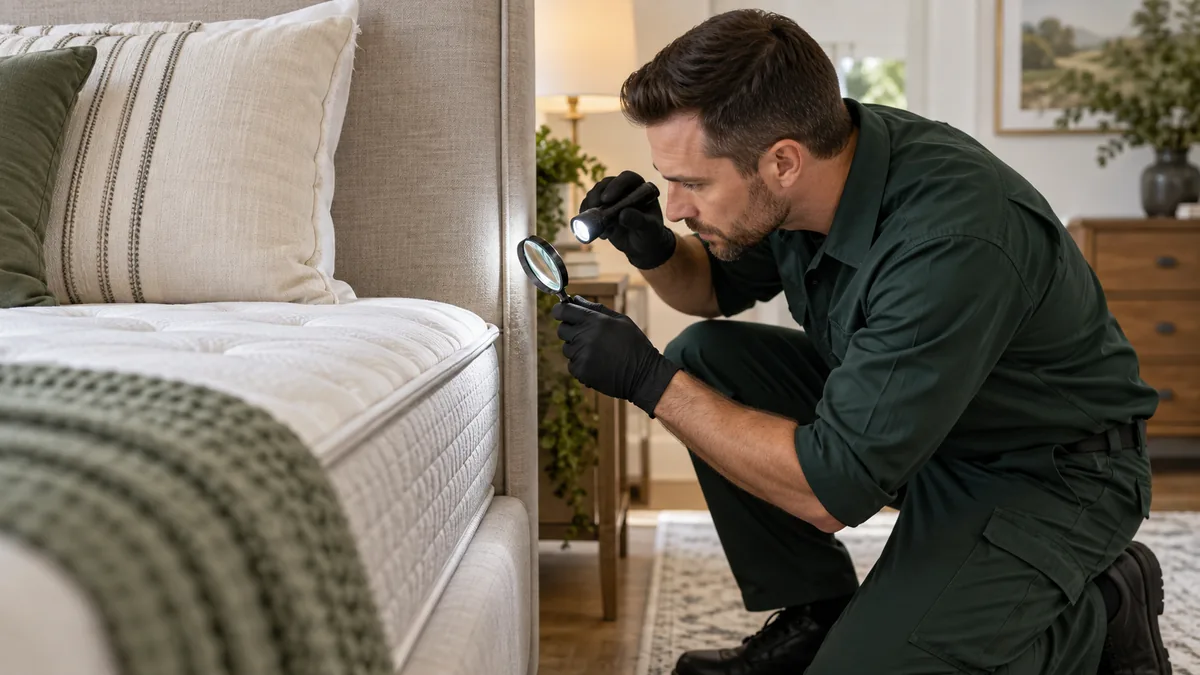
Use a flashlight and move slowly. Begin at the sleeping or resting area, then work outward. Bed bugs can shelter in screw holes, headboards, upholstered furniture and narrow gaps near the bed.
- Live insects or pale shed skins in protected seams and joints.
- Small dark spotting around mattress piping, bed frames or nearby cracks.
- Rust-colored marks on bedding.
- Eggs or tiny eggshells in sheltered areas.
What to do with a possible sample
Capture it in a sealed container or between clear tape without crushing it. Take several well-lit photos beside a coin or ruler for scale. Keep the sample away from sleeping areas while you arrange identification.
Do not rely on a phone app as the final answer. Carpet beetle larvae, small cockroach nymphs and other household insects are regularly confused with bed bugs.
What not to do next
Do not carry a mattress, sofa or bags through hallways before you understand the scope. Moving items can spread the problem to another room or apartment. Avoid total-release foggers and never apply a pesticide to skin or bedding unless the product label specifically allows that use.
If laundry is part of the preparation plan, move it in sealed bags and follow the temperature and handling instructions from a reliable source or your pest professional.
Why follow-up matters
Bed bug control commonly uses more than one method: physical removal, heat or steam where suitable, encasements, monitoring and carefully selected pesticides. EPA and New York health guidance both describe an integrated approach rather than a single quick fix.
Ask how the company will measure progress and when the rooms will be inspected again. In multi-unit housing, building management may need to coordinate access or evaluate neighboring units.